Charley Bates
Charley Bates, known to his associates as Master Bates, is one of the most vividly drawn juvenile members of Fagin's criminal gang. A boy of about Oliver Twist's age, he is distinguished less by his skill as a thief than by his irrepressible, often raucous, sense of humor. His character serves as a foil to the more calculating Artful Dodger, and his arc—from a gleeful participant in petty crime to a horrified witness of murder and, finally, to a reformed and prosperous grazier—provides one of the novel's few unambiguous stories of moral redemption.
Identity and Introduction
Charley Bates first appears in Fagin's den alongside the Dodger, smoking a long clay pipe and drinking spirits with the air of a middle-aged man. He is immediately characterized by his explosive laughter, which often erupts at moments that bewilder the innocent Oliver. When Oliver naively praises the workmanship of stolen pocket-books, Master Bates finds the reply so exquisitely ludicrous that he nearly chokes on his coffee. This defining trait—a near-constant, uncontrollable mirth—marks him as the gang's comic relief, a boy who finds the entire enterprise of thievery a grand joke. He is described as having a lively sense of the ludicrous, and his laughter is frequently so violent that he rolls on the floor or kicks convulsively.
Role in the Gang and Relationship with Oliver
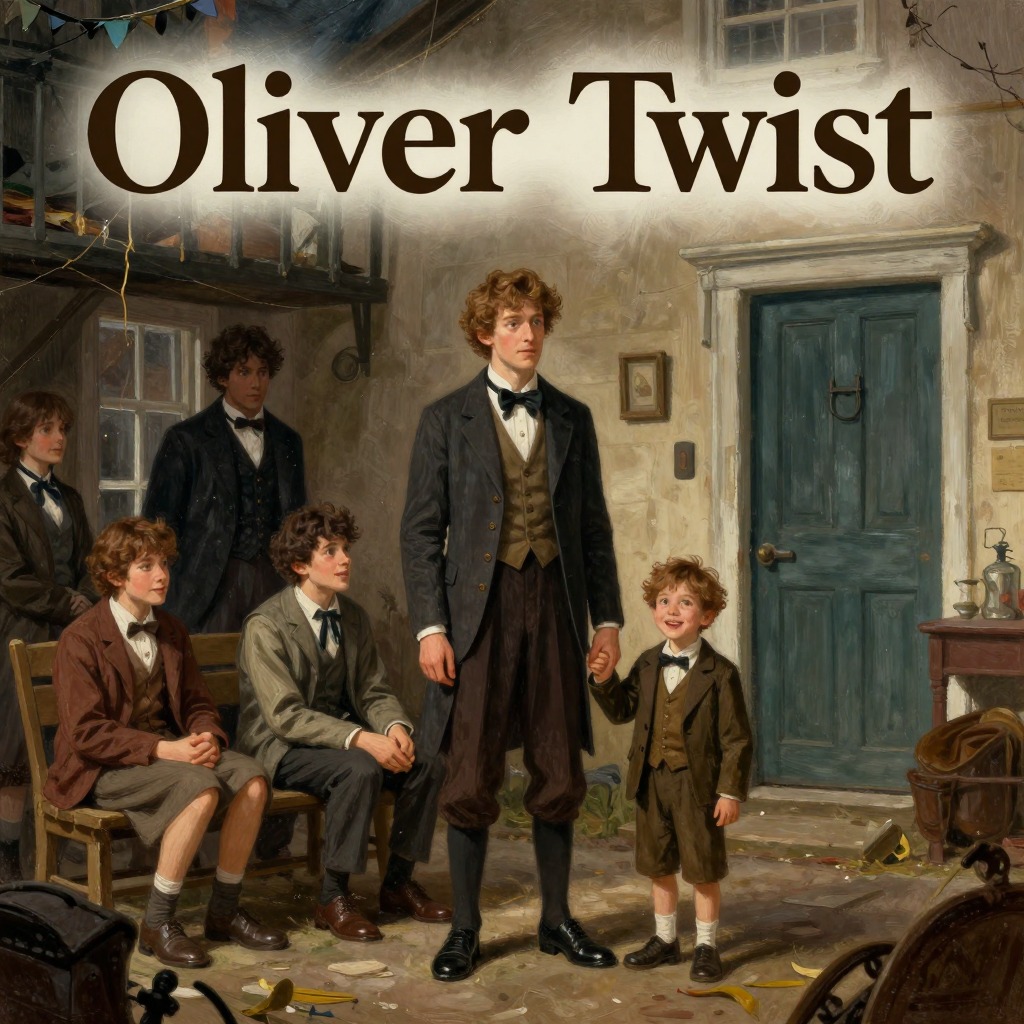
Within Fagin's household, Charley Bates is a junior partner to the Artful Dodger, deferring to his friend's superior cunning while contributing his own brand of mischievous energy. He participates in the daily pickpocketing games and the mock robberies Fagin stages to train the boys. When Oliver is brought to the den after being recaptured, Charley is the first to celebrate, dancing around him and marveling at his fine new clothes and books. He taunts Oliver with the volumes, pretending to read them, and later forces him to exchange his gentleman's suit for his old rags, all while laughing uncontrollably. Despite this cruelty, Charley's malice is less calculated than the Dodger's; it is the thoughtless cruelty of a boy who has never known any other life. He is genuinely puzzled when Oliver refuses to join the trade, and he and the Dodger earnestly try to persuade him, arguing that thievery is a jolly life and that Fagin will make something of him.
Witness to Murder and Moral Awakening
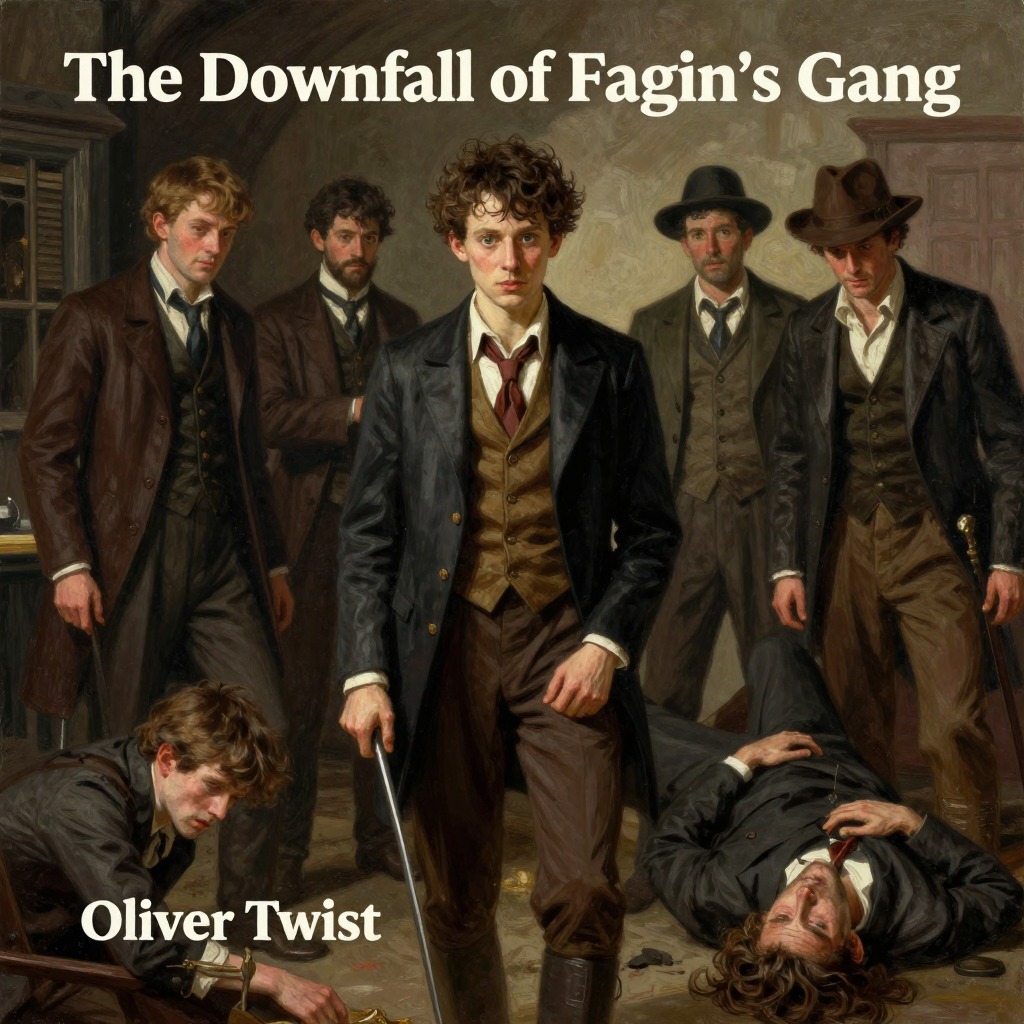
The pivotal moment in Charley Bates's life comes when he witnesses the aftermath of Bill Sikes's murder of Nancy. Hiding with other gang members in a safe house on Jacob's Island, Charley is the first to react when Sikes himself appears, a ghostly figure covered in blood and mud. The boy's reaction is instantaneous and visceral. He recoils, refuses to shake Sikes's hand, and calls him a "monster." In a burst of unprecedented courage, Charley throws himself single-handedly upon the powerful murderer, wrestling him to the ground and screaming for help, shouting that he will give Sikes up even if it means his own death. This act of defiance, born from horror at the violence he has just learned of, marks a complete break from his former life. He is no longer the laughing accomplice but a horrified witness who chooses justice over loyalty.
Reform and Later Life
Appalled by Sikes's crime, Charley Bates fell into a train of reflection on whether an honest life was not, after all, the best. Arriving at the conclusion that it certainly was, he turned his back on his past and resolved to amend his ways in a new sphere of action. He struggled hard and suffered much for some time, but his contented disposition and good purpose saw him through. From being a farmer's drudge and a carrier's lad, he eventually became the merriest young grazier in all Northamptonshire. His transformation from a thoughtless, laughing thief into a prosperous and honest farmer is one of the novel's few unqualified happy endings, suggesting that even those raised in the depths of criminality can be reclaimed by their own better nature and a change of circumstance.
Thematic Significance
Charley Bates's character arc serves as a counterpoint to the deterministic pessimism of the gentleman in the white waistcoat, who repeatedly predicts that boys like Oliver will come to be hanged. While the Artful Dodger fulfills that prophecy by being transported for life, Charley's reform offers a more hopeful vision. His story demonstrates that the environment of crime, while powerful, is not inescapable. His laughter, which initially seems a sign of his corruption, ultimately gives way to a moral seriousness that saves him. He is a testament to the idea that even those most immersed in vice can be shocked into virtue by the sight of true evil, and that the capacity for change exists even in the most unlikely hearts.